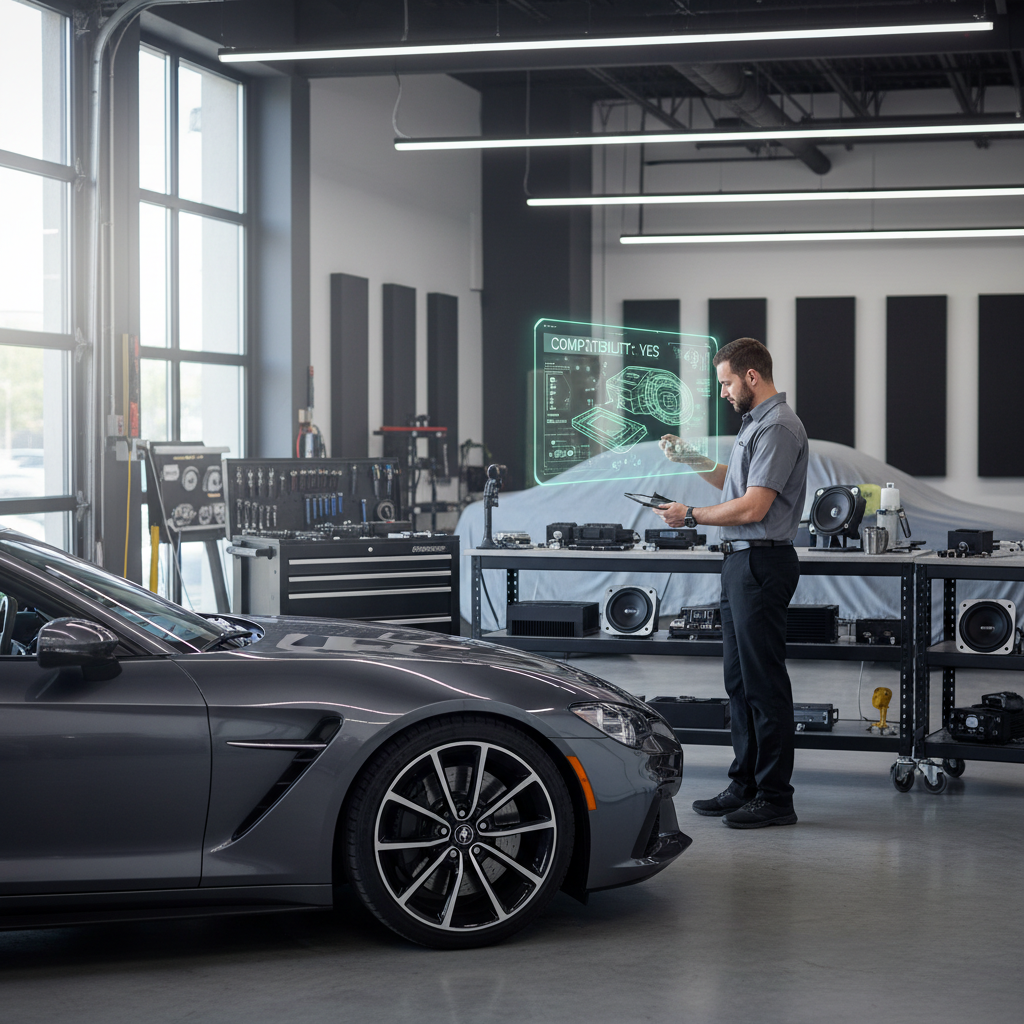
Large Language Models (LLMs) are changing how customers find your car audio and accessory shop. Instead of searching for "car audio shop near me," they are asking specific questions to AI-powered search engines. They ask, "What double-DIN radio fits my 2023 Ford F-150?" or "Can you put a 12-inch subwoofer in a 2022 Honda Civic?"
When a potential customer asks a question like this, the AI looks for the most direct, authoritative answer online. If your website provides that answer, you become the source. You win the click, the call, and the customer. This is the new battleground for visibility, and it’s won with content that directly addresses vehicle compatibility.
Why Fitment Is the New SEO
Compatibility is everything in the car audio and accessories business. A product either fits a customer’s vehicle or it doesn’t. Questions about fitment are not casual browsing; they are high-intent queries from customers who are actively planning a purchase. They have a vehicle, they have a need, and they are looking for a solution.
Historically, customers might have used a fitment guide on a large ecommerce site. Today, they expect the search engine itself to provide the answer. For your local shop, this is a massive opportunity. By structuring your website to answer these compatibility questions, you can intercept customers at the most critical point in their decision-making process, positioning your shop as the local expert.
How to Structure Your Site for Fitment Questions
To become the go-to source for AI-powered search, your website needs to be more than a gallery of cool builds. It needs to function as a database that clearly connects products and services to the specific vehicles they fit. This requires a deliberate content strategy.
Here’s how to provide the clear, structured information that LLMs are looking for.
Create Hyper-Specific Product & Service Pages
Every product and service you offer needs a dedicated page on your website. On each of these pages, you must clearly list the vehicles it is compatible with. Do not assume visitors or search engines know that a "universal" product fits most cars.
For a specific head unit, remote starter, or speaker set, your page should include a section titled "Vehicle Compatibility" or "Fits These Vehicles."
- Make: e.g., Ford, Chevrolet, Toyota
- Model: e.g., F-150, Silverado 1500, Camry
- Year Range: e.g., 2021-2024
- Trim/Notes: e.g., "Fits Lariat and King Ranch trims," or "Requires Brien-Fab adapter bracket for base model."
This level of detail turns a generic product page into a powerful asset that directly answers a specific search query. An AI is far more likely to cite a page that says "The Kenwood DMX9708S fits 2020-2023 Ford Explorers" than one that doesn't.
Build Vehicle-Specific Landing Pages
Instead of making customers search your site for what fits their car, create pages dedicated to the most popular vehicles you service. A page titled "Ford F-150 Audio, Security, and Accessory Upgrades" is a magnet for high-value local customers and a clear signal to search engines.
Each of these pages should list all the products and services you offer for that specific vehicle. You can organize it by category:
- Head Units that fit the F-150 dash
- Speaker upgrades for factory locations
- Subwoofer enclosures designed for under the rear seat
- Compatible remote start and alarm systems
- Popular lighting and accessory additions
These pages establish your authority and make it incredibly easy for both users and AI to see that you are an expert on a specific vehicle.
Title Your Gallery Images with Full Details
Your gallery is one of your most valuable assets, but only if it’s structured correctly. Vague descriptions like "Subwoofer Install" or "Custom Audio" do nothing for AI search. Every project you feature should be treated as a piece of fitment content.
Adopt a new titling convention for all gallery and portfolio items:
-
Old Title: Custom Box
-
New Title: Custom Ported Subwoofer Enclosure for Two 12-inch Subwoofers in a 2022 Ram 1500
-
Old Title: Amp Rack
-
New Title: Custom Amplifier Rack and AudioControl DSP Installation in a 2021 Toyota 4Runner
This practice populates your website with dozens or hundreds of specific, long-tail answers to fitment questions. When someone asks an AI about putting an amp rack in their 4Runner, your gallery image and description can become the source of the answer.
Putting It Into Action This Week
You don't need to overhaul your entire website overnight. Start small and build momentum.
- Pick your top 3 selling products. Go to their pages on your website and add a detailed "Vehicle Compatibility" list with makes, models, and year ranges.
- Identify the single most common vehicle that comes into your shop. Create one new, detailed landing page for it, listing all the services and products you offer for that vehicle.
- Find your best 5 project photos. Update their titles and descriptions on your website to include the Make, Model, Year, and the specific products installed.
These three actions will immediately begin building your site
Want help putting these ideas to work for your shop? Request a call with NextReach Solutions.