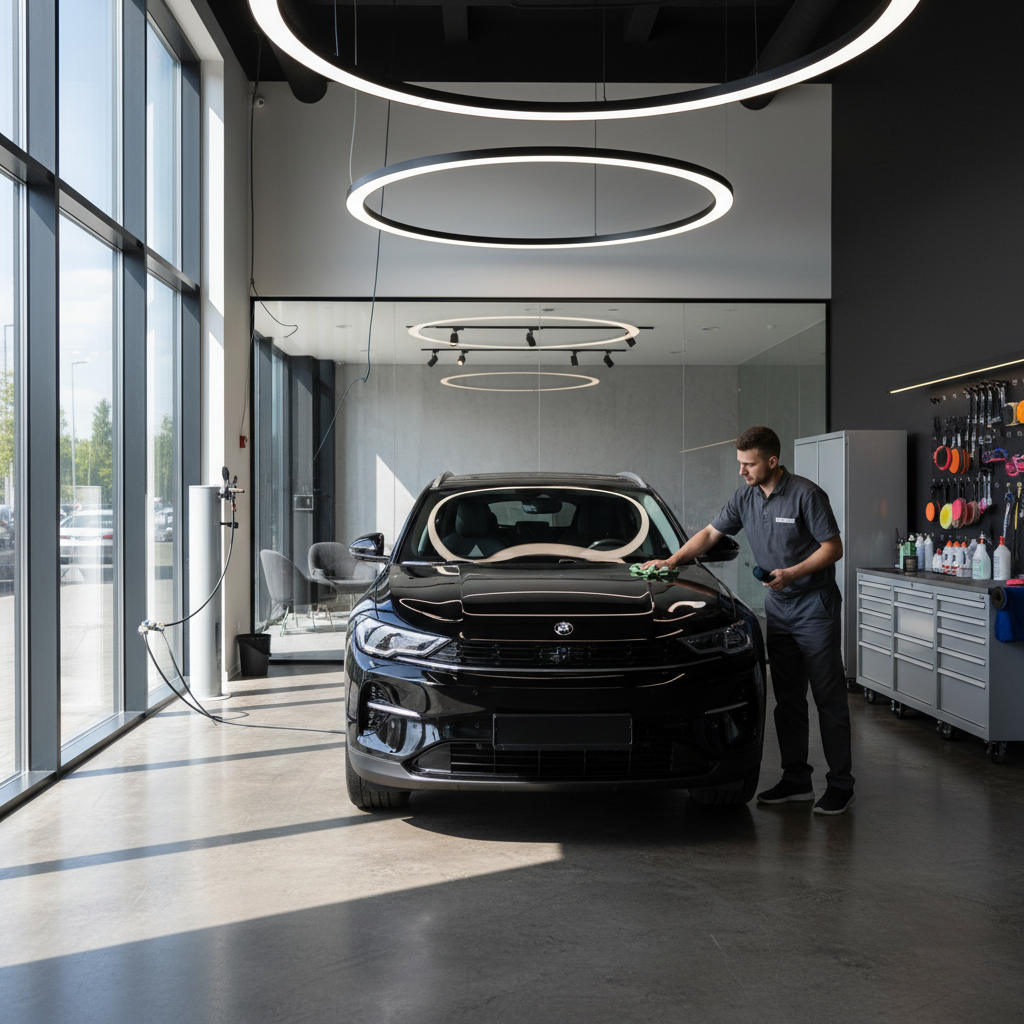
Your potential customers are no longer just typing "car wash near me" into Google. They’re asking their phones, smart speakers, and car dashboards specific, conversational questions. "Where can I get a touchless car wash that's safe for a ceramic coating?" or "Which car wash is best for removing dog hair from an SUV?"
Welcome to the era of AI-powered search. Large Language Models (LLMs) are powering features like Google's AI Overviews, which aim to provide a single, comprehensive answer instead of a list of links. To win in this new landscape, your car wash’s website needs to be the definitive source of information that the AI trusts to construct that answer.
If your website only lists your address, hours, and a basic menu, you're becoming invisible. To capture the next generation of customers, you need to shift your online strategy from targeting keywords to answering questions.
The New Customer Journey: From Keywords to Conversations
The fundamental shift is from broad keywords to specific intent. A search for "car wash Dallas" is a general inquiry. A question like, "How long does an interior and exterior car wash take in Dallas?" reveals a customer with a specific need and a time constraint. They are further along in the buying process.
AI search engines work by synthesizing the best information from multiple websites, forums, and review sites into a single, easy-to-digest answer. The AI's goal is to be as helpful as possible, as quickly as possible. Your goal is to make your website the most helpful, explicit, and authoritative source on all topics related to your car wash.
When an AI scours the web to answer a user's question, it's looking for direct, unambiguous information. If your website provides the clearest answer, you stand the best chance of being featured, cited, and recommended.
Question Type 1: Service & Feature Specifics
Customers want to know exactly what they are paying for. Vague service names like "The Gold Package" or "Super Wash" are no longer sufficient. Your website must break down every package and service into its component parts, directly answering the questions a discerning customer will have.
Consider these potential AI queries:
- "Does your ultimate wash include tire shine and wheel cleaning?"
- "What kind of wax do you use in your premium wash?"
- "Is your basic wash safe for a new car's paint?"
- "Do you offer an unlimited monthly wash plan?"
- "Which of your packages includes an undercarriage wash?"
How to Answer on Your Website:
Stop thinking of your services page as a simple menu. It needs to be a detailed sales resource. Instead of one page with a table, create a dedicated page for each core service or package.
For example, for your "Ultimate Wash" package, the page should have sections and text that explicitly state the details:
- Headline: The Ultimate Wash: Complete Interior & Exterior Clean
- Bulleted List of Inclusions: Use a clear, scannable list. "What's Included:"
- High-Pressure Soap Wash
- Spot-Free Rinse
- Triple Foam Conditioner
- Undercarriage Wash with Rust Inhibitor
- High-Gloss Tire Shine
- Wheel Guard Rim Protection
- Carnauba Wax Application
- Descriptive Paragraph: Write a short paragraph that uses conversational language. "Our Ultimate Wash is our most comprehensive package, designed to protect your vehicle while leaving it spotless. It includes a powerful undercarriage wash to remove road grime and a rust inhibitor to guard against corrosion. We finish with a hand-applied Carnauba wax for lasting shine and protection, along with a high-gloss tire shine to make your wheels look like new."
This single page now contains direct answers for half a dozen potential questions, making it a rich resource for an AI to pull from.
Question Type 2: Logistics and Convenience
Beyond the services themselves, customers have practical questions that determine whether they can and will visit your location. If an AI can't find the answers to these logistical questions, it may recommend a competitor whose website is more forthcoming.
Think about the barriers to entry for a potential customer:
- "How long does the express wash take?"
- "Can your automatic car wash fit a dually pickup truck?"
- "Is there a comfortable waiting area with Wi-Fi?"
- "Are you open on Sundays?"
- "Do you accept Apple Pay?"
- "Is there a height restriction for your wash tunnel?"
How to Answer on Your Website:
A comprehensive, easy-to-find FAQ (Frequently Asked Questions) page is the single best tool for this. This page should be a primary item in your website's navigation menu. Group questions by category (e.g., Our Services, Billing, At Our Facility).
Example FAQ Entry:
## What is the maximum vehicle size you can accommodate?
"Our automatic wash tunnel has a maximum height clearance of 7 feet (84 inches) and can accept vehicles up to 8 feet (96 inches) wide. This covers most standard cars, minivans, SUVs, and standard pickup trucks. Unfortunately, we cannot accommodate dually (dual rear wheel) pickup trucks, oversized ladder racks, or vehicles taller than 7 feet. For oversized vehicles, please consider our hand wash services."
This answer is direct, provides specific numbers, and offers an alternative, making it incredibly useful for both a human user and an AI assistant.
Question Type 3: Problem & Solution Focused
Many customers don't search for a service; they search for a solution to their problem. This is where you can capture customers who may not even know what service they need. By creating content that addresses their specific issue, you position your car wash as the expert solution.
These queries are often highly specific:
- "How to get tree sap off a new car without damaging the paint?"
- "What is the best way to remove salt and winter grime from a car's undercarriage?"
- "Where can I get my car interior cleaned after my dog got sick in it?"
- "Is an automatic car wash safe for a soft-top convertible?"
- "How to remove hard water spots from car windows?"
How to Answer on Your Website:
This is where a blog or "Car Care Tips" section on your website becomes a powerful tool. Write short, practical articles that address these specific problems. Each article should define the problem and then position one of your services as the ideal solution.
Example Blog Post Concept:
- Title: How to Safely Remove Winter Salt & Grime From Your Car
- Body: Briefly explain how salt and de-icing chemicals are corrosive and can damage a car's undercarriage and paint over time.
- The Solution: Introduce your "Undercarriage Wash with Rust Inhibitor" service. Explain how it solves the problem: "Our specialized high-pressure undercarriage spray is specifically designed to flush away corrosive salt and grime from hard-to-reach areas. We then apply a rust inhibitor that provides a protective barrier against future corrosion, extending the life of your vehicle’s frame and components."
When an AI assistant sees a query about salt removal, it can confidently cite your article and recommend your specific service, because you have clearly connected the problem to your solution.
Your Website Is Your New Front Door
In the age of AI, your website is no longer a digital brochure. It is your 24/7 expert, answering every conceivable question a customer might have. By creating detailed service pages, building a comprehensive FAQ, and writing problem-focused blog posts, you provide the raw material that AI search engines need to recommend you.
This process requires thinking like a customer. Anticipate their questions, their worries, and their needs, and answer them with direct, specific, and helpful content. This builds trust and authority, making you the logical choice before they ever drive to your location.
Getting your website's content and structure right is the key to being the answer for AI search. At NextReach Solutions, we specialize in building websites and local search strategies for car washes that are designed to win in this new era of conversational search.
Want help putting these ideas to work for your shop? Request a call with NextReach Solutions.