The moments after a car accident are stressful. Your potential customer is standing on the side of a road, shaken, looking at a crumpled fender or a seriously damaged vehicle. Their first action isn't to calmly browse websites. It's to pull out their smartphone and search for immediate help.
They type "auto body shop near me," "collision repair open now," or "tow and repair shop [city]." In that moment, your shop's visibility on Google Maps and in local search results is the most critical factor in earning their business. This isn't about long-term brand building; it's about being the most visible, trustworthy solution in a moment of urgent need. Traditional SEO is important, but for collision centers, winning the "emergency search" is everything.
The Anatomy of an Emergency Search
To capture these high-intent customers, you must understand what they're searching for. The keywords are direct and action-oriented:
- Auto body shop near me
- Collision repair [city]
- Dent repair near me
- Car scratch repair [city]
- Body shop that works with [insurance company]
- Frame straightening shop
Notice the pattern. The searches are a combination of a specific service and a location. The searcher is looking at the top 3-4 results in the Google Map Pack and making a decision based on proximity, review ratings, and whether the business information Instantly answers their primary questions. Is it open? Can it fix their specific problem? Does it work with their insurance?
If your digital presence isn't optimized to answer these questions in seconds, you lose to a competitor who is.
Optimizing Your Google Business Profile for Urgency
Your Google Business Profile (GBP) is your digital storefront in an emergency. The basic Name, Address, and Phone number (NAP) are just the beginning. You need to treat your GBP as a primary conversion tool, packed with information that builds immediate trust.
List Granular Services: Don't just list "Collision Repair." A panicked driver needs to know if you can handle their specific issue. Create a comprehensive service list within your GBP profile. Each service should be listed individually:
- Bumper Repair
- Fender Repair
- Frame Straightening
- Paintless Dent Repair (PDR)
- Auto Painting
- Hail Damage Repair
- Post-Collision Diagnostics
- Aluminum Body Repair
For each service, add a detailed description of what it entails. For "Frame Straightening," you might write: "We use state-of-the-art computer-aided frame machines to precisely measure and restore your vehicle's frame to original factory specifications after a serious collision." This detail signals expertise to both Google and potential customers.
Leverage Key Attributes: Attributes are quick, clickable tags in your GBP that can make a huge difference. Select every attribute that applies to your shop, paying special attention to those that address immediate concerns:
- Free estimates
- Works with all insurance companies
- Loaner cars available
- Onsite rentals
Seeing "Works with all insurance" can instantly put a customer at ease, making them much more likely to call your shop first.
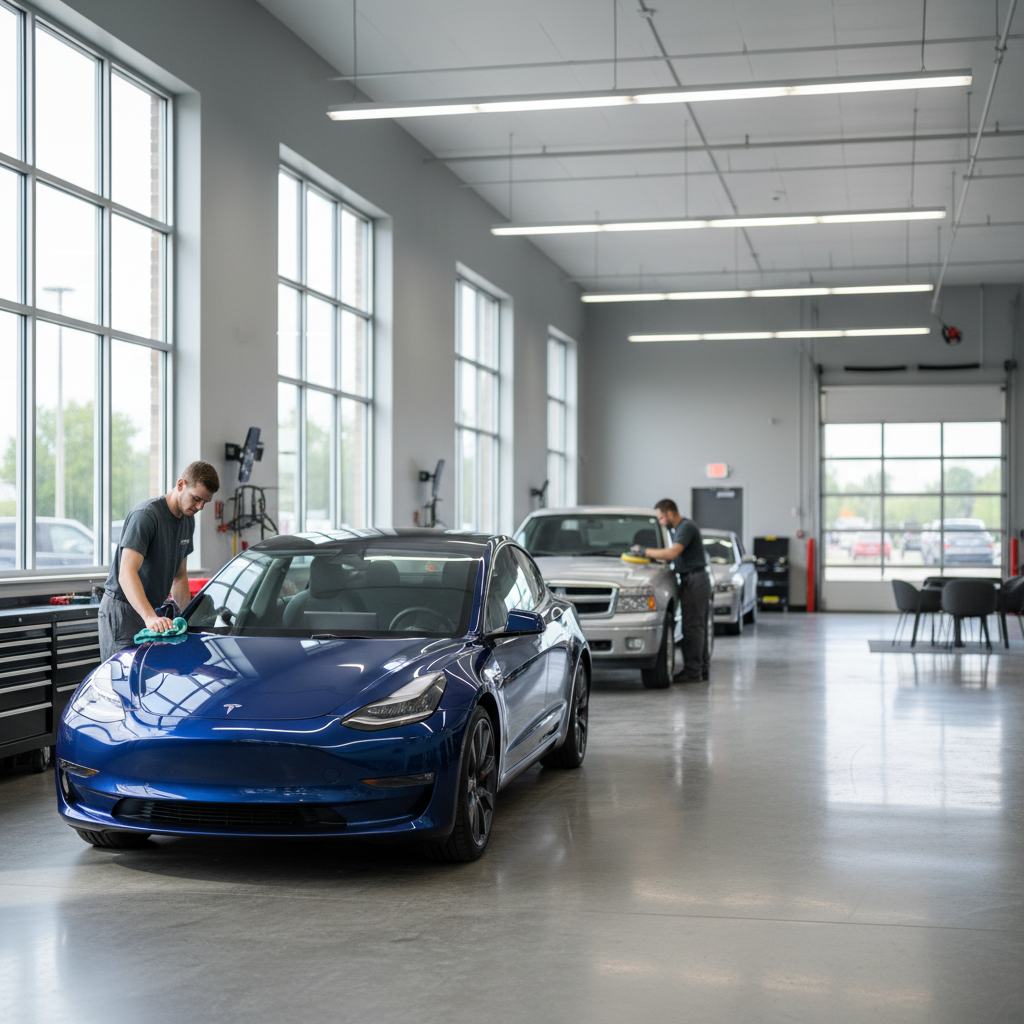
Use Photos to Tell a Story: Your GBP photos should do more than show off finished work. While before-and-after shots are powerful, you should also showcase your facility and process. Upload high-quality images of:
- Your clean, professional waiting area.
- Your advanced equipment, like a modern paint booth or frame machine.
- Your team working on vehicles.
- The exterior of your shop from the street, making it easy to find.
Categorize these photos correctly in GBP (e.g., "Team," "Facility," "At Work"). This paints a picture of a professional, well-equipped, and trustworthy operation.
Building Hyperlocal Authority Signals
To win the "near me" search, Google needs to be absolutely certain that you are the most relevant and authoritative collision repair shop for a specific geographic area. You accomplish this by creating hyperlocal authority signals.
This starts with your website. Instead of having a single "Services" page, create dedicated pages for your core services in the primary city or neighborhood you serve. The page titles and H1 headings are crucial:
yourbodyshop.com/collision-repair-springfieldyourbodyshop.com/bumper-repair-springfieldyourbodyshop.com/hail-damage-springfield-il
On these pages, don't just copy and paste content and swap the city name. Write unique text that demonstrates true local relevance. Mention nearby landmarks, major cross-streets, or highways. For example:
"Our Springfield collision center is conveniently located on Main Street, just two blocks south of Lincoln Park and a short drive from I-55. If you've been in an accident anywhere in the downtown Springfield area, we are your closest, most trusted repair partner."
This level of detail proves to Google that your business is an integral part of that specific community, making it more likely to show your business for searches originating from that area.
The Insurance Company Connection
Dealing with insurance is the biggest headache for customers after a collision. You can turn this pain point into a powerful local SEO advantage. Many customers will search specifically for shops that work with their provider, such as "body shop that takes Progressive near me."
Create a dedicated page on your website for each major insurance carrier you work with (e.g., State Farm, Geico, Allstate, Progressive). Title these pages clearly: "Your Partner for State Farm Claims in [Your City]."
On these pages, explain the process of working with that specific insurer. Detail how you help customers with the claim, communicate with the adjuster, and manage the repair process. This content is incredibly valuable for two reasons:
- It helps you rank for those valuable "insurance + body shop" keywords.
- It builds immense trust with potential customers by showing you understand their situation and can guide them through the complex insurance process.
Weave these insurance company names naturally into your other service and location pages as well. Mentioning that you are a preferred repair facility for certain carriers is a strong signal of trust and authority.
Website Speed and Mobile Experience
A driver on the side of the road will not wait more than a few seconds for your website to load. If your site is slow, they will hit the "back" button and call your competitor. Page speed is a critical ranking factor, but for collision shops, it's also a critical user experience factor.
Your website must be fully responsive, meaning it looks and works perfectly on a smartphone. The phone number should be a clickable button at the very top of the page. The navigation should be simple, with clear links to "Services," "Insurance," and "Contact Us." Remove any slow-loading carousels, pop-ups, or overly large images that bog down the mobile experience.
The goal is to provide information as quickly and efficiently as possible to a user in a stressful situation.
By focusing your SEO efforts on winning the emergency "near me" search, you align your strategy with the immediate needs of your most valuable customers. It requires a detailed approach to your Google Business Profile, a hyperlocal focus for your website content, and a clear strategy for addressing the insurance question. These tactics ensure that when a driver in your area has a bad day, your shop is the first and best call they make.
At NextReach Solutions, we specialize in implementing these precise strategies. We help auto body shops enhance their digital presence through targeted local SEO, mobile-first web design, and visibility on new AI search platforms, ensuring you connect with customers the moment they need you most.
Want help putting these ideas to work for your shop? Request a call with NextReach Solutions.