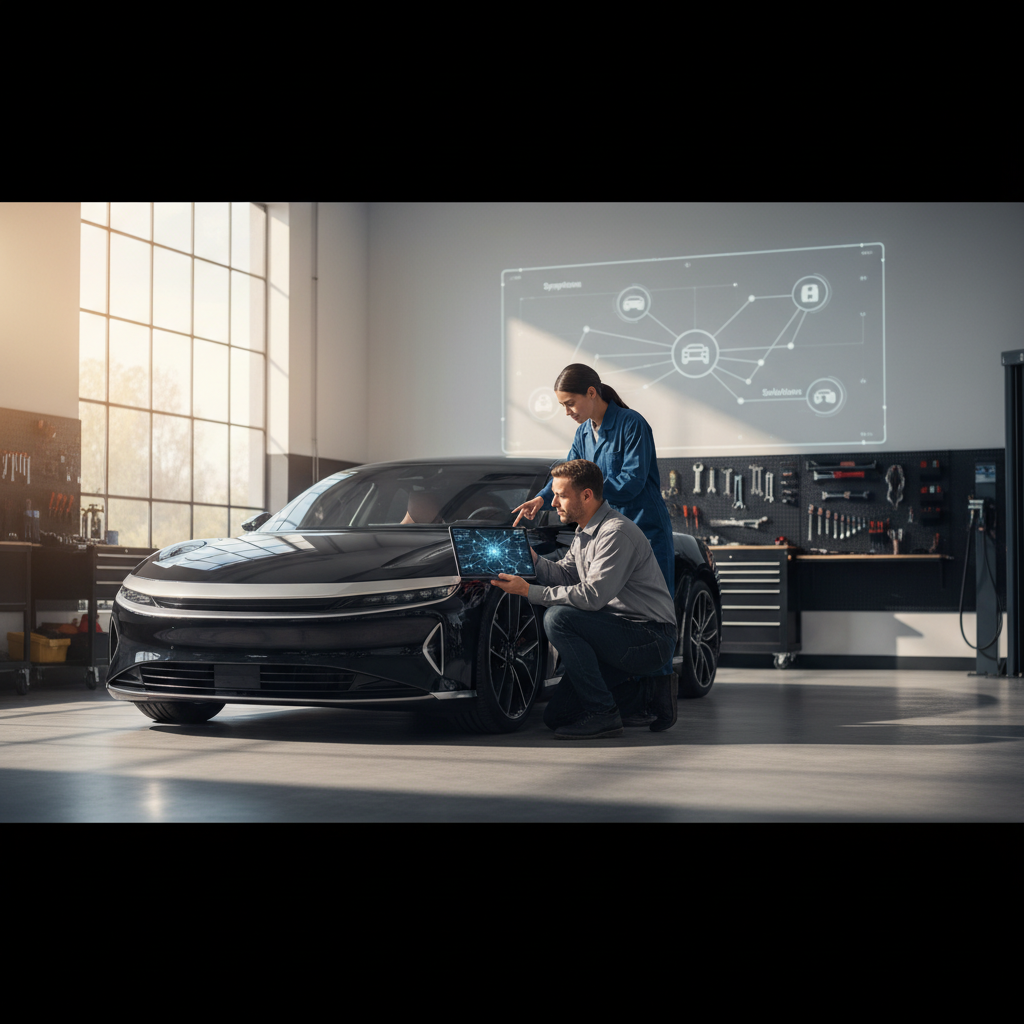
Independent auto repair shop owners are busy. You don't have time for marketing fluff. You need strategies that connect directly with customers who have a problem and need it fixed—now. The way customers find you is changing. It's moving beyond simple keywords and into conversational AI search.
This new environment requires a different approach. The winning strategy is to stop thinking like a mechanic and start thinking like your customer. They don’t search for "serpentine belt replacement." They search for "squealing noise from engine when I start my car."
The Shift From Keywords to Conversations
For two decades, local search was about keywords: "mechanic near me," "brake repair cleveland." You built your website to match these exact phrases. That era is ending.
AI-powered search, like Google's AI Overviews and other platforms like Perplexity, encourages users to ask questions in natural language. Instead of typing a few keywords, they describe their problem in detail, as if they were talking to a person. A search might now be: "why is my car overheating but the heater is blowing cold air?"
This is a fundamental shift. AI search engines are designed to find direct answers to these complex, conversational queries. If your website provides the best, clearest answer, the AI is more likely to feature your shop in its response.
Your Customer's Journey Starts with a Symptom
No driver, unless they are an enthusiast or a former technician, diagnoses their own car trouble. They experience symptoms. A vibration, a noise, a smell, a warning light. Their first step is to understand the symptom.
Your website needs to be the resource that translates their symptom into a potential diagnosis and a clear solution (your service). If a potential customer hears a clunking noise when they go over bumps, they don't know they need a "sway bar link replacement." They know their car is making a noise it shouldn't.
Your website must bridge this knowledge gap. By creating content that directly addresses these common symptoms, you meet the customer at the very beginning of their search journey. You build immediate trust by demonstrating expertise before they even pick up the phone.
How to Capture Symptom-First Searches
The goal is to create specific content that maps a common symptom to one of your core services. This doesn't require a complete website overhaul. It involves adding targeted, question-and-answer content to your existing service pages.
Here’s the process:
-
Identify High-Value Symptoms: For each of your major services (brakes, suspension, AC, engine diagnostics), list the top 3-5 symptoms customers report. For example, for "AC Repair," symptoms include "car ac blowing warm air," "musty smell from vents," or "ac only works when driving."
-
Create Symptom-Focused Sections: On each relevant service page, add a new section. A good title would be "Common AC Problems & Symptoms."
-
Answer the Question Directly: Under that section, use subheadings (## or ###) for each symptom. Frame it as a question. For example: "## Why is My Car AC Blowing Hot Air?"
-
Explain the Causes Simply: In a short paragraph, explain the most likely causes in plain English. Avoid overly technical jargon. List possibilities like low refrigerant, a bad compressor, or a faulty condenser. For each cause, briefly explain what it is and what it does.
-
Outline the Solution: Explain your diagnostic process. Let the customer know the first step is an inspection to confirm the cause. This positions your service as the logical next step.
A Practical Example: "Car Shaking When I Brake"
Let's apply this to a brake repair service page. Millions of people search for this exact symptom every year.
Your existing page probably lists services like "Brake Pad Replacement" and "Rotor Resurfacing." To optimize for AI search, you'll add a section like this:
## Common Brake Problems & Their Symptoms
Why is my car shaking or vibrating when I brake?
A shaking or vibrating feeling that happens only when you apply the brakes is almost always caused by an issue with your brake rotors. The intense heat from braking can cause the flat surface of the rotor to warp over time. When the brake pads press against this uneven surface, you feel it in the steering wheel or brake pedal.
Potential Causes:
- Warped Brake Rotors: The most common cause. We can measure the rotor for runout to confirm.
- Worn Brake Pads: Uneven wear can contribute to vibrations.
- Caliper Issues: A stuck brake caliper can cause overheating and lead to warped rotors.
Our first step is a comprehensive brake system inspection to pinpoint the exact cause. From there, we can determine if your rotors need to be resurfaced or replaced.
This clear, concise content directly answers a common question. It tells an AI search engine that your shop is an authority on this specific problem.
Putting It Into Action This Week
You can start this process in less than an hour.
- Pick one service. Choose a common, high-value service like suspension work.
- Identify three symptoms. Think of what customers say on the phone. "My ride feels really bumpy," "My car pulls to the side," or "I hear a clunking noise when I go over speed bumps."
- Update your service page. Go to your website's suspension repair page. Add a new section called "Is It Time for Suspension Repair? Common Symptoms."
- Write a short section for each symptom. Use the symptom as the heading. In 2-3 sentences, explain what might be causing it (e.g., worn shocks/struts, bad ball joints) and state that an inspection is the next step.
By focusing on the problem your customer is trying to solve, you align your website with how modern search engines work. You build authority, earn trust, and get the first call from customers who are ready for a solution.
As the digital landscape evolves, ensuring your auto repair shop is visible in these new AI-driven search results is critical. NextReach Solutions specializes in the web design and local SEO strategies that get automotive businesses found, helping you connect with customers from the first symptom to the final repair.
Want help putting these ideas to work for your shop? Request a call with NextReach Solutions.