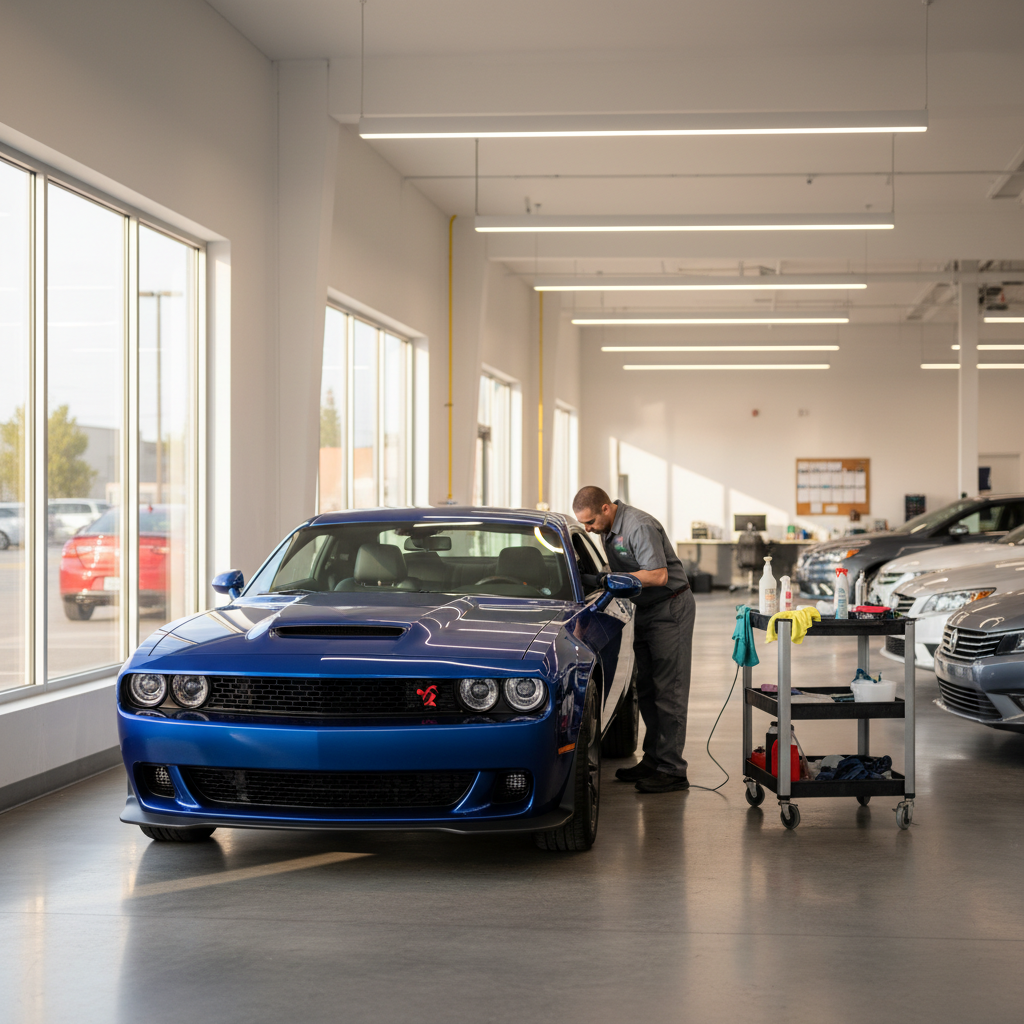
Most used car dealerships approach local SEO the same way: optimize the homepage for "used cars in [City]" and hope for the best. This treats your website like a digital business card. But your most powerful local SEO asset isn't your homepage—it's your inventory.
Every car on your lot is an opportunity to rank for a specific, high-intent search. Buyers aren't just typing "used car dealership near me." They are searching for a "used Honda CR-V in Dallas" or a "pre-owned Ford F-150 with low mileage in Austin." By treating each vehicle detail page (VDP) as a targeted local landing page, you can capture these ready-to-buy customers.
From Broad to Buyer-Focused
Competing for a broad term like "used cars for sale" is expensive and inefficient. You're up against massive national aggregators with huge budgets. The real opportunity lies in long-tail keywords that include a make, model, and location.
These searches have significantly higher purchase intent. Someone searching for a specific car model in their city is much further down the buying funnel than someone browsing general terms. Your goal is to make sure your exact vehicle shows up for that exact search.
Anatomy of a Locally Optimized VDP
Your inventory management system likely auto-populates VDPs with basic information. This is not enough. You need to enhance these pages to signal local relevance to Google. Treat every VDP as a unique piece of marketing content.
Here’s a checklist for every vehicle you list:
-
SEO Title: Structure your page titles precisely. Don't just use the year, make, and model. Use the formula:
Used [Year] [Make] [Model] for Sale in [Your City], [State]. This immediately tells Google what the page is about and where it's relevant. -
H1 Heading: The main heading on the page should mirror the SEO Title. Consistency is key.
-
Image Alt Text: Don't skip this. Describe the image and include the location. For example:
Front view of a used 2020 Toyota RAV4 for sale at our Anytown dealership. -
Unique Vehicle Description: Go beyond the generic manufacturer specs. Write 150-200 words of unique text for each vehicle. Mention its specific condition, trim level, recent maintenance, and unique features. Crucially, end this description by stating its availability explicitly:
This 2020 Toyota RAV4 is available for a test drive today at our dealership located in [Your City], [State].
Structure for Search Engine Success
Technical details matter. How your VDPs are structured helps search engines understand and feature your inventory.
First, ensure your URLs are clean and descriptive. A good URL looks like yourdomain.com/inventory/used-2020-toyota-rav4-dallas-tx-vin12345. A bad URL looks like yourdomain.com/inventory/index.php?id=87. The former is readable by both humans and search engines; the latter is not.
Second, implement structured data using Schema.org. The Vehicle and Car schema types allow you to spoon-feed Google specific details like VIN, mileage, engine type, and price. When combined with Offer schema, Google understands the vehicle is for sale. This information can power rich results in search, making your listing stand out with photos, pricing, and mileage directly on the results page.
The "Sold" Inventory Strategy
What should you do when a car is sold? Most dealerships simply delete the VDP. This is a mistake. Deleting the page creates a 404 "Not Found" error, and you lose any SEO authority that page has built.
Instead, keep the page live and update it. Here’s how:
- Clearly mark the vehicle as SOLD in the title and at the top of the page.
- Remove the price and calls to action for that specific car.
- Add a new section to the page: "View Similar Vehicles in Stock."
- Display and link to 3-5 other relevant cars currently on your lot (e.g., other SUVs, other Toyotas, or other vehicles in a similar price range).
This strategy accomplishes two things. It preserves the SEO value of the original page, allowing it to continue attracting searchers. It also creates a helpful user experience by immediately directing potential buyers to available inventory, reducing your bounce rate and keeping them on your site.
By systematically optimizing every VDP and leveraging your sold inventory, you create hundreds of targeted, locally-focused pages that work 24/7 to attract qualified buyers. It’s a granular strategy that moves beyond the homepage and focuses on what your customers are actually searching for.
Executing a VDP-level SEO strategy requires a deep understanding of automotive web design and local search. NextReach Solutions works exclusively with automotive businesses to implement these kinds of high-impact local SEO tactics, ensuring your inventory gets seen by the right buyers in your market.
Want help putting these ideas to work for your shop? Request a call with NextReach Solutions.