Your customer hears a new, alarming sound from their truck or car. A deep whine that changes with speed. A clunk when they turn. They know it’s not good, and a quick search suggests a serious, expensive problem with the differential or driveline.
They are now in a state of high anxiety, looking for a true specialist. They land on your website. What do they see? Does it calm their fears and build immediate trust, or does it look like a generic brochure full of jargon they don’t understand?
For a high-stakes, specialty service like differential repair, your website has one primary job: to act as a digital trust engine. It must convert an anxious visitor into a confident customer who believes you are the definitive expert to solve their problem. This isn’t about flashy design; it’s a strategic blueprint for conversion.
Your Homepage Isn't a Welcome Mat, It's Triage
Most auto repair websites waste the most valuable digital real estate—the space "above the fold" that a visitor sees without scrolling. They use generic headlines like "Welcome to Our Shop" or "Quality Auto Repair." This fails to connect with the user in distress.
Your homepage must function like an emergency room triage nurse: quickly assess the problem and direct the patient to the right solution. The top of your homepage must do three things in less than five seconds:
- Confirm Their Problem: The headline should speak directly to their need. For example: "Expert Differential, Axle, and Driveline Repair for Dallas-Fort Worth." This immediately tells the visitor they are in the right place.
- Show the Solution Path: The primary call-to-action button shouldn't be a passive "Learn More." It needs to be an active solution. Use clear, directive text like "Get a Professional Diagnosis" or "Speak to a Specialist."
- Provide Instant Trust Signals: Prominently display your most critical credibility markers. This includes ASE certifications, key affiliations (like Jasper or Yukon Gear & Axle), your years in business, or a tagline like "Serving Houston Since 1998."
Stop Listing Services, Start Showing Proof
A bulleted list of services—"Differential Rebuilding," "Gear Ratio Changes," "Posi-Traction Installation"—is necessary, but it doesn’t build trust on its own. To the customer who only knows their truck is making a "humming noise," this list is just technical jargon.
You need to show, not just tell. Go beyond a simple gallery of finished vehicles and create a "Proof of Work" section on your homepage and service pages.
This section should feature high-quality photos and videos that visually communicate your expertise:
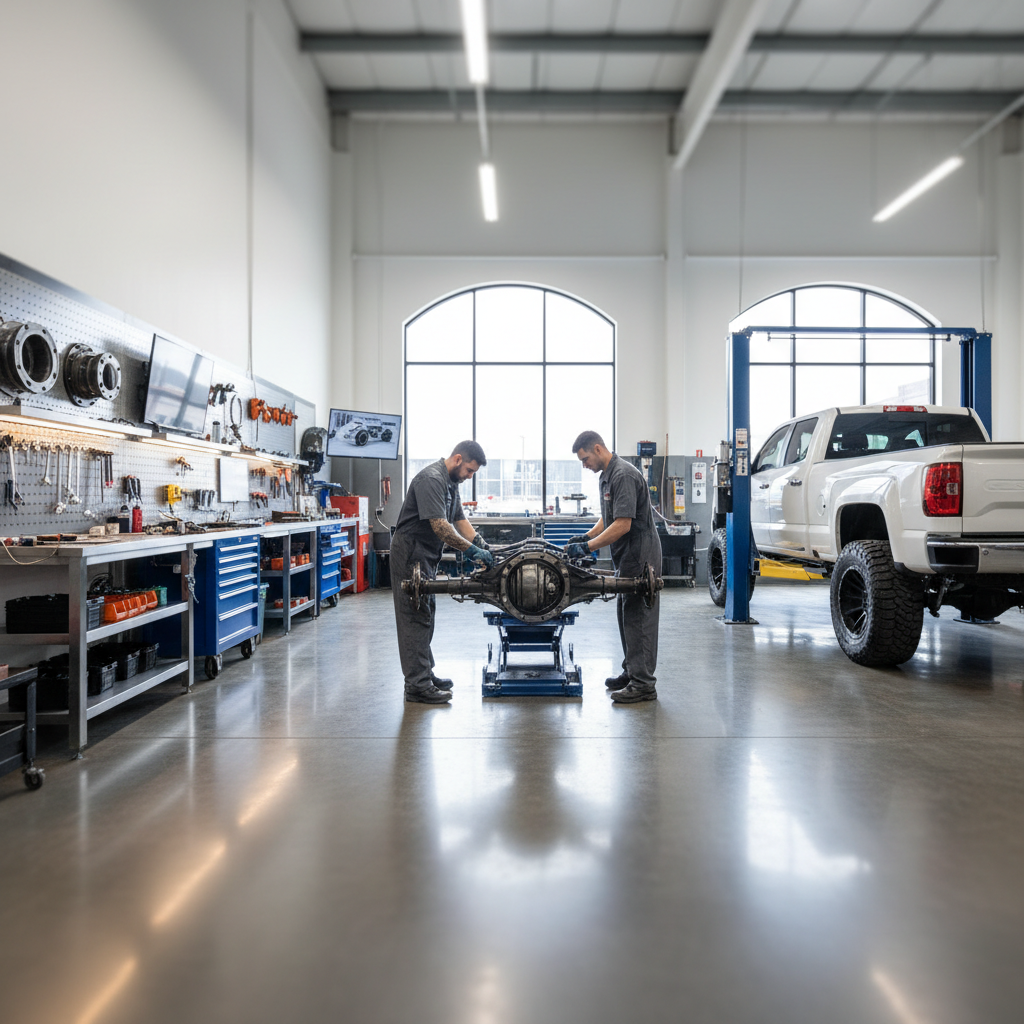
- Technicians at Work: Images of your team performing complex rebuilds or using specialized equipment.
- The Right Tools: Clear shots of your shop’s differential-specific tools, presses, and diagnostic equipment.
- Before and After: A picture of a damaged, metal-shaving-filled differential next to a fully rebuilt and cleaned unit is incredibly powerful.
- A Clean, Organized Shop: A well-lit, orderly workspace communicates professionalism and attention to detail.
The goal is to send a clear, non-verbal message: "This is what we do all day, every day. Your vehicle is in the hands of true specialists."
Create a "Sounds of a Bad Differential" Resource
Customers don’t search for "hypoid gear service." They search for symptoms. They go to Google and type in "whining noise from rear of truck when accelerating" or "clunking sound when I turn my Jeep." Your website must answer these specific queries.
Building a simple "Symptom Checker" or "Sounds of a Bad Differential" page is one of the most powerful conversion tools you can have. This resource should include:
- Short Audio or Video Clips: If possible, record the common sounds of differential failure. A 10-second clip of a classic pinion bearing whine is instantly relatable.
- Simple Descriptions: Pair each sound with a clear, non-technical explanation. "A 'whine' that starts at a certain speed and changes pitch with acceleration often points to worn pinion bearings. This requires immediate attention to prevent further damage."
- A Clear Next Step: Each symptom’s description must end with a strong call to action: "If you hear this sound, schedule a professional diagnosis before the failure becomes catastrophic."
This page positions you as the diagnostic expert and directly captures customers at the very beginning of their search journey.
Demystify the Differential to Build Confidence
Fear of the unknown is a major source of anxiety for customers. They worry about being upsold or paying for unnecessary repairs simply because they don’t understand the system. An educated customer is a more confident buyer.
Dedicate a small section of your site to demystifying the driveline. You don’t need a textbook; you need a simple, reassuring explanation. Use a basic, royalty-free diagram and briefly explain:
- What it does: "Your differential allows your wheels to spin at different speeds when you turn—a critical function for safe handling."
- Why it fails: "Most failures are due to fluid breakdown from high mileage or heavy use, leading to worn-out gears and bearings."
- The repair process: "Our process involves a complete disassembly and inspection to find the exact point of failure, ensuring we only replace what’s necessary."
This transparency shows you are a trustworthy partner, not someone looking to exploit a customer’s lack of knowledge.
The Right Call to Action: From "Contact Us" to "Start a Diagnosis"
"Contact Us" is the weakest call to action in the service industry. It’s passive and non-specific. The button on your website should be your best salesperson, guiding the user toward the most logical and valuable next step.
For a differential shop, the goal is to get the vehicle in for an inspection. Your primary CTA buttons should reflect that:
- "Request a Professional Diagnosis"
- "Get an Expert Opinion"
- "Speak With a Driveline Specialist"
This language is specific, authoritative, and aligned with the customer’s need. Place this CTA button—along with your phone number—in the top right of your header, under your opening headline, and after every major section of your site. Make it easy and obvious for them to take the next step.
By designing your website to be a trust engine, you directly address the fears and questions of your target customer. You stop being a digital brochure and become a critical part of their solution. If your shop’s website isn’t converting anxious visitors into paying customers, contact NextReach Solutions to learn how our web design services can build a site that reflects your true expertise.
Want help putting these ideas to work for your shop? Request a call with NextReach Solutions.