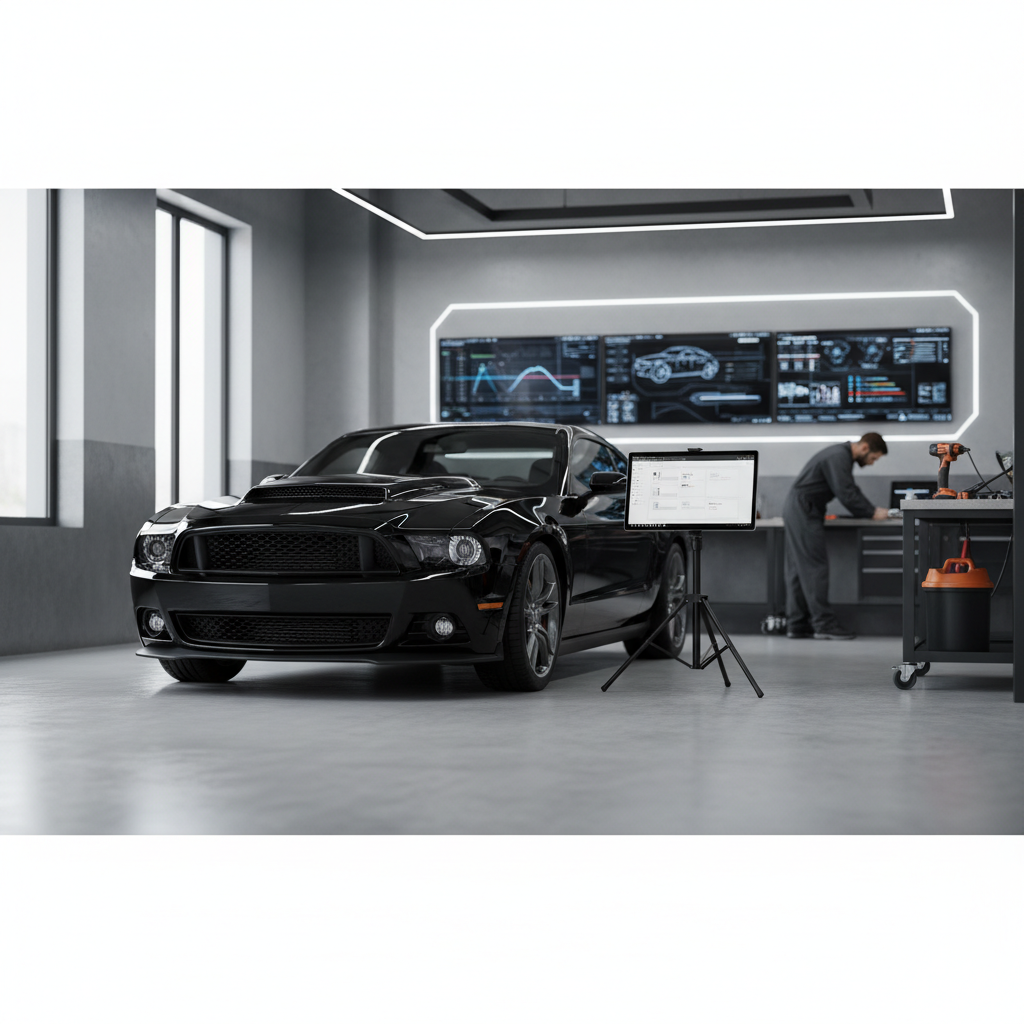
Your customers aren't looking for a simple A-to-B repair. They're enthusiasts, researchers, and dreamers planning a significant investment in their vehicle. They spend hours on forums, watch countless YouTube videos, and scrutinize every detail. Your website can't just be a digital business card; it needs to be the ultimate resource that convinces them you’re the only shop for the job.
Most shop websites are static galleries of finished work. To attract serious performance and custom clients, you need a "digital dyno"—a site architected to prove your expertise, showcase your process, and convert knowledgeable visitors into high-value customers. It’s about demonstrating performance, not just showing it.
Go Beyond the Gallery with "Build Diaries"
A gallery of finished cars is expected. It shows the "what," but it doesn’t show the "how" or "why," which is what enthusiasts crave. Instead of a simple grid of photos, create detailed "Build Diary" or "Project Spotlight" pages for your most significant projects.
Each Build Diary should be a comprehensive case study that tells a story. Walk the visitor through the entire journey:
- The Goal: Start with the client's initial request. Was it a 1,000hp street car, a track-ready monster, or a specific aesthetic they were after?
- The Teardown: Show the "before" state. This creates a powerful contrast with the final product.
- The Process: Document the key phases of the build. Include photos and short video clips of fabrication, engine assembly, wiring, and component installation.
- The Parts: List the key components used. This detail shows you work with quality brands and helps you rank for specific, high-intent search terms like "Hellcat supercharger install" or "Garrett G-series turbo fabrication."
- The Results: This is critical. Show the final dyno sheet, videos of the car in action, and professional photos of the completed build. The numbers and the sensory experience are your proof.
These pages establish immense authority. They prove your capability, justify your pricing without ever mentioning it, and give potential customers a clear vision of what to expect when they work with you.
Prove Your Expertise in the "Tech Corner"
Performance enthusiasts are researchers. They want to understand the trade-offs between different setups and the technical reasoning behind your approach. A "Tech Corner" or "Knowledge Base" section on your website is the perfect platform to meet this need.
Write articles that answer the specific, complex questions your customers have. Don't be afraid to get technical. Topics could include:
- How to Choose the Right Camshaft For Your LS
- Fuel System Requirements for 800+ Horsepower
- The Pros and Cons of E85 Tuning
- Our Approach to Custom Turbo Manifold Design
These articles do two things: they attract organic search traffic from enthusiasts deep in the research phase, and they position your technicians as true subject matter experts. When a potential customer reads a detailed, logical explanation of a complex topic on your site, they build trust in your shop’s ability to execute.
Put Them in the Driver's Seat with Video
For a performance shop, sound and motion are everything. Static photos can't capture the visceral thrill of a first engine start, the scream of a car at wide-open throttle on the dyno, or the intricate details of custom fabrication work. Video is not a luxury; it's a necessity.
Integrate video throughout your website:
- Homepage: An embedded hero video showing dynamic shots of your shop, your team, and cars you've built is the fastest way to communicate your brand.
- Build Diaries: Include short clips of the engine running, dyno pulls, and walkarounds.
- Service Pages: Have a video explaining your tuning process or showcasing your fabrication capabilities.
The raw, authentic sounds of a healthy engine are your most powerful marketing tool. Use them.
Convert Visitors with a Clear Path
All this great content is wasted if the visitor doesn’t know what to do next. Your website’s structure must guide them toward a conversion. This means moving beyond the generic "Contact Us" form.
Tailor your calls-to-action (CTAs) to the visitor's mindset. Someone reading a Build Diary is deep in the consideration phase. Their next logical step isn't to ask for a price but to start a conversation.
Use specific, low-friction CTAs like:
- "Start Your Build Consultation"
- "Discuss Your Project With an Expert"
- "Schedule a Dyno Tuning Session"
These CTAs align with the services you provide and the customer's journey, making them far more effective than a generic contact button. Place them prominently on your homepage, at the end of every Build Diary, and on every service page.
Your website has the potential to be your most powerful salesperson. It can work 24/7 to attract, educate, and convert the exact type of customers you want. By building a site that demonstrates your expertise and respects the visitor's intelligence, you create a high-performance engine for growth. If you'd rather focus on building cars than building websites, the team at NextReach Solutions specializes in designing these exact types of conversion-focused web presences for performance shops.
Want help putting these ideas to work for your shop? Request a call with NextReach Solutions.