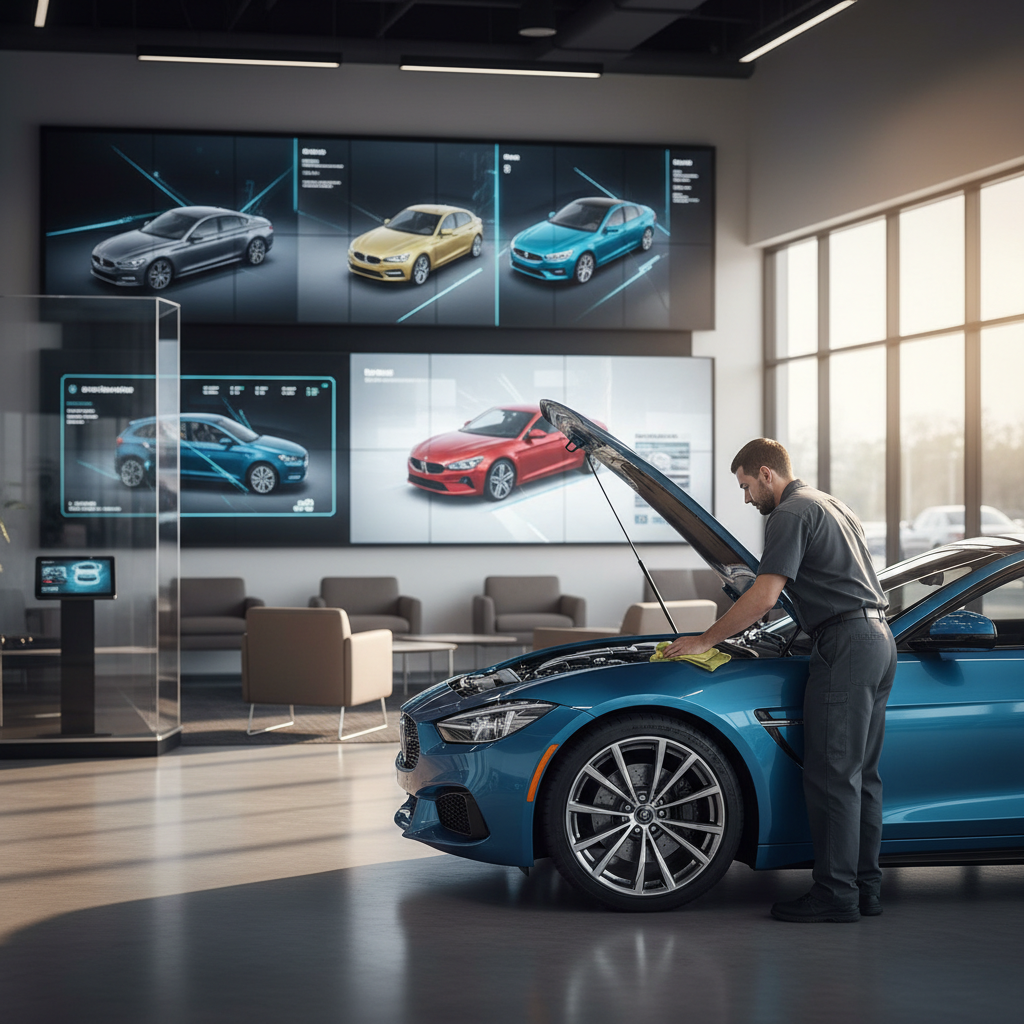
Your website isn't just a digital lot; it's your primary showroom. Too many used car dealership sites are little more than a searchable database of Vehicle Detail Pages (VDPs). This approach misses a critical opportunity: to sell the dealership itself, not just the individual cars.
Customers aren't just buying a vehicle; they are choosing a dealership they can trust. They want to know who you are, what you stand for, and what the experience of buying from you will be like. A "Virtual Showroom" strategy moves beyond the VDP to create a comprehensive, trust-building online experience that turns browsers into buyers.
The Problem with VDP-Centric Design
A typical VDP-focused website directs all traffic toward inventory listings. The homepage is a search bar, featured vehicles, and little else. While inventory is crucial, this model commoditizes your dealership. It puts your 2018 Honda Civic in direct competition with every other 2018 Civic in a 50-mile radius based on little more than price.
This design philosophy fails to answer key questions a potential buyer has:
- Why should I buy from your dealership?
- What kind of financing options do you offer for people in my situation?
- What is your reputation in the community?
- Who are the people I'll be dealing with?
By focusing exclusively on the "what" (the car), you neglect the "why" (your dealership). The Virtual Showroom approach fixes this.
Principle 1: Show the Sales Floor
Your physical showroom isn't just a garage full of cars. It's clean, well-lit, and staffed by professionals. Your website should reflect that same environment. This means investing in high-quality photography—not just of your cars, but of your dealership itself.
- Facility Photos: Show wide, bright shots of your lot, your sales office, and your service bays (if you have them). A clean, organized, and professional-looking facility builds immediate trust. If a customer can "see" where they are going, they are more likely to make the trip.
- Team Photos: Put professional headshots of your sales team and managers on an "About Us" or "Meet the Team" page. A friendly face makes your dealership approachable and human. Include a brief, personable bio for each team member. This isn't a corporate directory; it's an introduction.
Principle 2: Curate Your Inventory Like a Showroom Display
When a customer walks onto your lot, you don’t just point them to a row of cars. You ask questions and guide them. Your website can do the same thing by curating inventory beyond the standard "Year, Make, Model" search.
Create dedicated landing pages that group vehicles for specific buyer needs. These act as mini-showrooms for different customer segments:
- "Best Cars for New Drivers": Group reliable, safe, and affordable vehicles. Write a short introduction about what makes a great first car.
- "Fuel-Efficient Commuter Cars": Showcase your inventory of sedans and hybrids that get over 30 MPG.
- "Work Trucks Under $20,000": Target small business owners and contractors with a curated list of capable, affordable pickups.
- "Family-Friendly SUVs": Group your three-row SUVs and crossovers, highlighting safety and cargo space.
These pages do more than just filter inventory. They show that you understand your customers' needs. They also create powerful assets for local SEO, capturing searches like "best used SUV for families near me."
Principle 3: Bring Your Dealership’s Story to Life
Every independent dealership has a story. It might be a family-owned business passed down through generations, or it might be a new dealership founded on the principle of fair, no-haggle pricing. This story is your single greatest competitive advantage against large, faceless auto groups.
Your "About Us" page is the most important non-inventory page on your website. Don’t waste it with generic corporate-speak.
- Tell Your Origin Story: Who founded the dealership, and why? What is your connection to the local community? Be specific. Mention towns, local landmarks, and your history in the area.
- Define Your Philosophy: What makes you different? Is it your rigorous inspection process? Your unique financing connections? Your commitment to post-sale support? This is where you make your case for why a customer should choose you over a competitor with the same car at a similar price.
This narrative builds an emotional connection and provides a reason to trust you. It transforms a simple transaction into a relationship.
Turning Your Website into a Sales Engine
Building a Virtual Showroom is about creating a comprehensive experience that sells your dealership as effectively as it sells your cars. It’s a strategic shift from a passive inventory database to an active, trust-building sales tool. By showing your facility and team, curating inventory around customer needs, and telling your unique story, you give buyers a compelling reason to walk onto your lot.
If you want to transform your dealership's website from a simple VDP list into a high-performance Virtual Showroom, NextReach Solutions specializes in web design for automotive businesses that drives real-world results. We build websites designed to build trust and convert browsers into lifelong customers.
Want help putting these ideas to work for your shop? Request a call with NextReach Solutions.