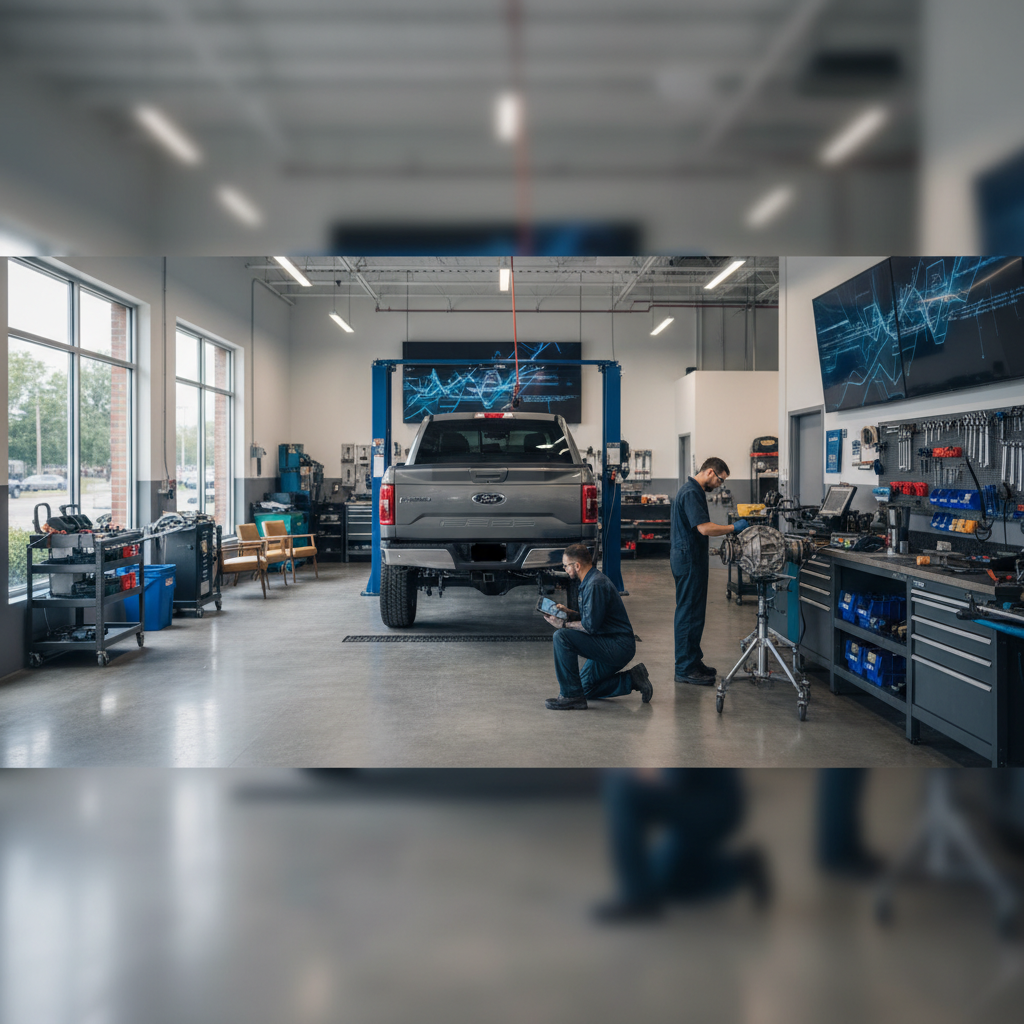
Your future customers aren't searching for "differential repair near me." They're searching for "whirring noise when I accelerate," "clunking sound when I turn," or "vibration from the rear of my truck." The rise of AI-powered search engines like Google's AI Overviews and Perplexity means these diagnostic queries are getting answered directly in the search results. If your shop's website provides the best answer, you win the customer.
This is the "What's That Noise?" tactic. It's a content strategy designed specifically for how people actually search when they have a problem, and it’s critical for visibility in the new era of AI search.
Why "Noise" Is Your Most Valuable Keyword
When a driver hears a new, worrying sound from their vehicle, their first stop is usually Google. They don't know if it's a wheel bearing, a U-joint, or a pinion bearing. They just know it sounds wrong. They are at the very beginning of their customer journey.
By creating content that helps them diagnose the noise, you build immediate trust and authority. You become the expert not just in fixing the problem, but in understanding it. This is far more powerful than simply having a webpage that says "Differential Repair."
AI search engines are designed to find and synthesize direct answers to questions. When a user asks, "Why does my car make a humming noise that gets faster as I drive?" the AI looks for the most comprehensive, clear, and expert explanation. Your goal is to provide that explanation.
How to Diagnose Driveline Noises on Your Website
To execute this strategy, you need to create a dedicated page or a series of blog posts on your website focused entirely on diagnosing common driveline noises. This content must be clear, easy to understand for a non-expert, and structured for search engines.
Start by brainstorming the sounds your customers describe over the phone. You know these better than anyone. They likely fall into a few categories:
- Whirring or Howling: Often related to gear wear or bearing failure, changing pitch with vehicle speed.
- Clunking or Banging: Typically on takeoff, when shifting into gear, or during turns. Suggests backlash issues, U-joints, or CV joints.
- Rumbling or Vibration: Felt throughout the vehicle, often pointing to driveshaft imbalance or failing carrier bearings.
- Grinding or Growling: A severe symptom, especially during turns, indicating potential gear damage or bearing failure.
For each noise, create a dedicated section. Structure it like this:
The Anatomy of a "Noise Diagnosis" Page
Your content needs to be more than just a list of sounds. It must guide the user from symptom to solution, with your shop positioned as the logical final step.
Start with the Sound
Use a clear heading like, "A Whirring Noise That Changes Pitch with Speed." Immediately describe the symptom in plain English, just as a customer would. "You might hear this as a high-pitched whine or a low-pitched howl, and it gets louder and higher as you accelerate."
List Potential Causes
Next, list the most common culprits for that specific noise. Be specific to driveline components.
- Pinion Bearing Failure: Explain that this bearing supports the pinion gear and can create a classic howling noise when worn.
- Carrier Bearing Wear: Describe how these bearings support the differential carrier and can cause a similar noise.
- Worn Ring and Pinion Gears: Note that improper gear setup or lack of lubrication can cause a whining or whirring sound.
- Wheel Bearings: It's crucial to also include related but distinct issues. Acknowledge that a wheel bearing can also cause a whirring noise, but explain how a technician can differentiate it (e.g., the noise changes when swerving left or right).
Explain the "Why"
Briefly explain why this is happening. Don't get overly technical. For example: "These high-speed bearings wear out over time, and once the hardened surface is gone, they generate noise and heat." This builds credibility and helps the customer understand the urgency.
State the Solution
Clearly state the solution. "Diagnosing the exact bearing requires a professional inspection. The solution involves disassembling the axle, pressing out the old bearings and races, and installing new ones to precise specifications."
This structure directly answers the user's question, provides expert context, and presents a clear path to resolution. AI models are trained to recognize this kind of structured, helpful content and will prioritize it in their answers.
Putting It All Together: An Example
Let's create a mini-outline for a page targeting "clunking noises."
Title: Diagnosing Clunking Noises When You Shift or Turn
Intro: A sudden "clunk" from your truck or car can be alarming. This guide will help you understand the most common causes related to your vehicle's driveline.
## Clunking When Shifting from Park to Drive
- Most Likely Cause: Worn U-joints in the driveshaft.
- What it is: Universal joints are flexible couplings that allow the driveshaft to spin without binding. When they wear, they develop excessive play.
- The Fix: Replacing the worn U-joint(s).
## Clunking or Banging When Turning
- Most Likely Cause (in a limited-slip differential): Worn clutch packs.
- What it is: The clutches in a limited-slip differential can wear out or become saturated with old fluid, causing them to grab and release instead of slipping smoothly.
- The Fix: A fluid change with the correct friction modifier additive or, in severe cases, rebuilding the clutch pack.
## A Note on Other Possibilities
- Briefly mention other potential causes like worn transmission mounts or motor mounts to show comprehensive expertise.
This focused approach provides immense value to a potential customer and is exactly the kind of expert content AI search is designed to find and feature.
By translating your diagnostic expertise into scannable, question-focused content, you can intercept customers at the most critical moment—when they first know they have a problem. Building out this resource on your website is one of the most powerful strategies for winning business in the age of AI search.
If you're ready to implement technical SEO and content strategies that capture high-value customers, contact NextReach Solutions to learn how our LLM visibility services can help your differential shop dominate its local market.
Want help putting these ideas to work for your shop? Request a call with NextReach Solutions.